Mold Removal in 9th and 9th, UT
9th and 9th is the neighborhood around the corner of 900 South and 900 East, two blocks east of Liberty Park, a walkable pocket of small shops and cafes that became the center of the city's counterculture in the 1970s and is now one of its most sought-after addresses. The Tower Theatre opened on the corner in January 1928 and is being restored by the Salt Lake Film Society to its original facade. The houses on the surrounding streets are 1900s to 1920s brick bungalows and cottages with cellars under part of the house.
A 1920 bungalow here sits on a brick foundation on the flat ground between Liberty Park and the East Bench, and its cellar was almost always finished into a bedroom or an office at some point. Meltwater from the bench runs west through these blocks every spring, the water table rises, and carpet on the slab and drywall on brick take it low on the wall. The single bathroom upstairs, with a window for a fan, is the other place the growth shows.
Homeowners near 9th and 9th reach an independent local mold provider through this site's phone line. That provider meters the cellar wall and the slab, then lays out the scope. We only set up the call.
9th and 9th mold removal under a brick bungalow
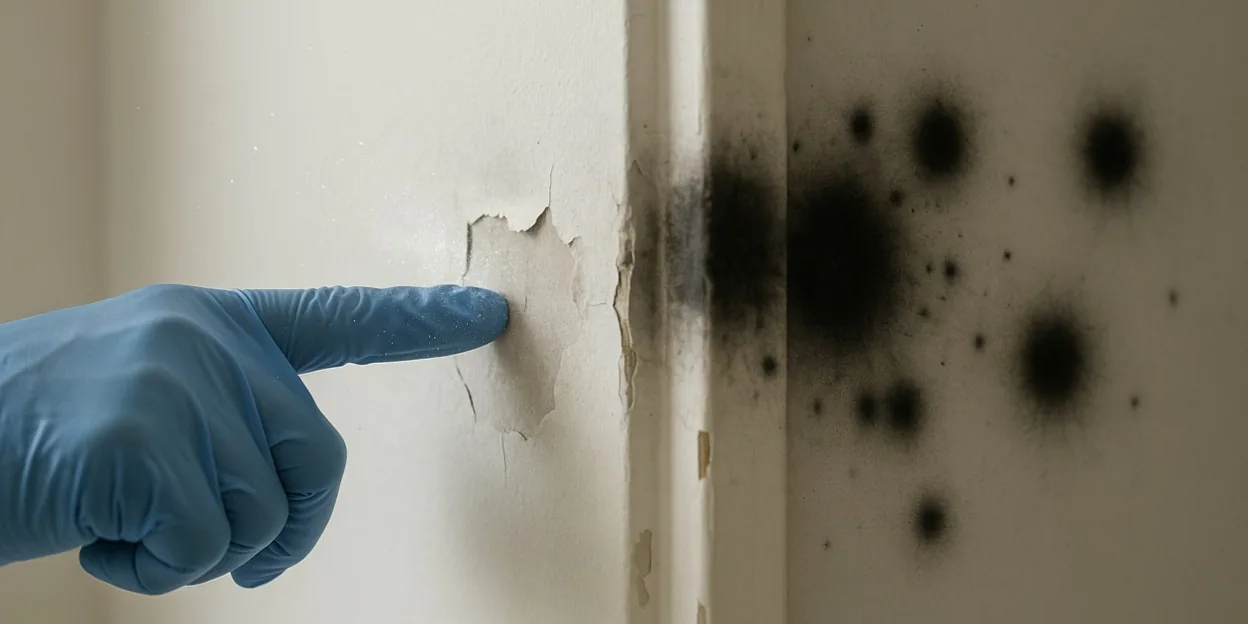
Growth on a finished cellar wall after the melt is mold removal. A black ceiling corner over the tub in a 1920s bathroom is bathroom mold removal. Putting the cellar back once the brick reads dry is mold damage repair.
The theater on the corner since 1928
The Salt Lake Film Society bought the Tower Theatre in December 2022 and is restoring the 1928 building that gives the corner its landmark.
Call (801) 457-5486 and tell us about the cellar. We put you through to a local mold provider serving 9th and 9th.
Services Available in 9th and 9th
Mold Removal
Growth on a basement wall after a window well filled or a stone foundation wept: room sealed, wet drywall cut to the meter line, framing cleaned and dried.
Black Mold Removal
A dark patch on a basement wall or behind a vanity, handled by how far the water went rather than its color: contain, remove, clean, then fix the leak.
Whole-Home Mold Remediation
A finished basement that soaked through during the melt, or a supply line that ran for weeks, mapped room by room and cleared in zones as one job.
HVAC Mold Cleaning
Swamp cooler pads, duct runs, furnace plenum, and the condensate pan cleaned when the house smells musty every time the blower or cooler starts.
Bathroom Mold Removal
Growth above a shower with no fan, behind a 1920s tile wall, or under a vanity with a slow trap leak, removed once the moisture source is fixed.
Attic Mold Remediation
Dark sheathing under a flat roof that iced up in January, or around a cooler curb, cleaned and treated once the ice dam or the roof leak is corrected.
Mold Odor Removal
A musty basement smell with nothing visible, traced to the wet carpet pad, the back of the paneling, or the bottom plate, then removed at the source.
Mold Damage Repair
Drywall, baseboard, carpet pad, and cabinet floors put back after removal, once the basement reads dry and the seepage or pipe is fixed.