Black Mold Removal in Salt Lake City, UT
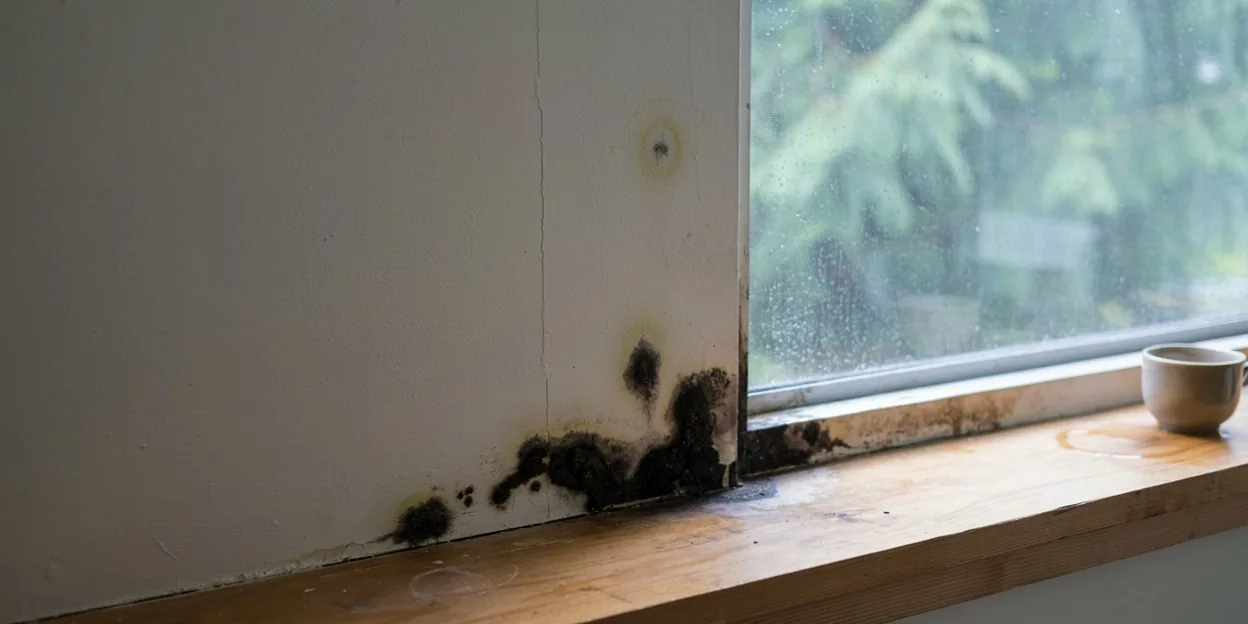
You pulled a sheet of 1970s paneling off the basement wall of your Taylorsville house to see why it had bowed, and the back of it was black from the floor up to your knee. The drywall behind it has the same dark bloom, and the room smelled like dirt the second the panel came loose. This site connects you by phone with an independent local provider who does black mold removal in Salt Lake City and across Salt Lake County.
The color is a question; the moisture line is the answer
Dark growth looks worse than pale growth, but the crew does not treat it differently, because color does not name the species and the species does not change the sequence. What changes the sequence is how far the water went. So the first hour is the same as any other wet wall: a moisture meter along the base of the paneling, across the slab under the carpet, and up the studs behind the drywall, with a line marked where the readings fall off.
Then the basement is sealed. Plastic at the stairwell, tape over the cold-air return and the registers, and a HEPA scrubber exhausting through a window well so the air moves toward the work and not away from it. Nothing dark gets scraped or sprayed before that plastic is up.
Put the panel back and do not spray it
If you have already pulled a panel, lean it back against the wall face-in and leave the room. Do not scrub the patch and do not spray it with bleach or vinegar; a wet, disturbed patch releases far more spores than a dry one left alone, and bleach on drywall does nothing below the paper.
Photograph the panel, the wall, and the floor. Close the basement door and, if the furnace shares that space, switch the thermostat fan from on to auto so it only runs when heating or cooling. Then look outside at the grade and the downspout on that side of the house; a dark wall in a Salt Lake basement is almost always a water path from the yard.
What leaves in bags, and what is cleaned in place
Paneling, drywall, carpet pad, and insulation with growth on them come out to the meter line and go into sealed bags inside the containment. The studs, the bottom plate, and the concrete behind them are HEPA vacuumed and wiped, and studs with growth in the grain are sanded or treated. Concrete, block, and tile stay; they are cleaned, not replaced.
Drying follows removal, with air movers and a dehumidifier running until the framing and the slab read dry. A dark patch that turns out to be one of several wet rooms becomes whole-home mold remediation. A dark bloom on a bathroom ceiling or behind a vanity is bathroom mold removal. A smell that remains after the material is gone is mold odor removal, and putting the wall back is mold damage repair.
Paneled basements, weeping block, and a valley that floods from below
Basements finished in the 1960s and 1970s across Taylorsville, West Valley City, Kearns, and Murray were often paneled straight over furring strips on the block wall with no vapor barrier, and the back of that paneling has been damp every spring since. The 1890s to 1920s houses in Liberty Wells and the Avenues sit on stone or soft brick that wicks groundwater, and a dark bloom low on a plaster wall is the same story in older material.
The Salt Lake County Health Department puts the homeowner cleanup line at about ten square feet on a hard surface; a dark wall behind paneling is past that. Utah licenses no mold trade, so the provider represents its own training, and the rebuild runs under a Utah contractor license. Most Utah policies exclude groundwater, so photograph everything before the first bag is filled.
When you call about a dark patch in a Salt Lake basement
Have the address, where the patch is, roughly how big it is, and what is behind it: drywall, paneling, plaster, or bare concrete. Say whether it is damp to the touch and whether anyone has sprayed or scrubbed it. Call (801) 457-5486.