HVAC Mold Cleaning in Salt Lake City, UT
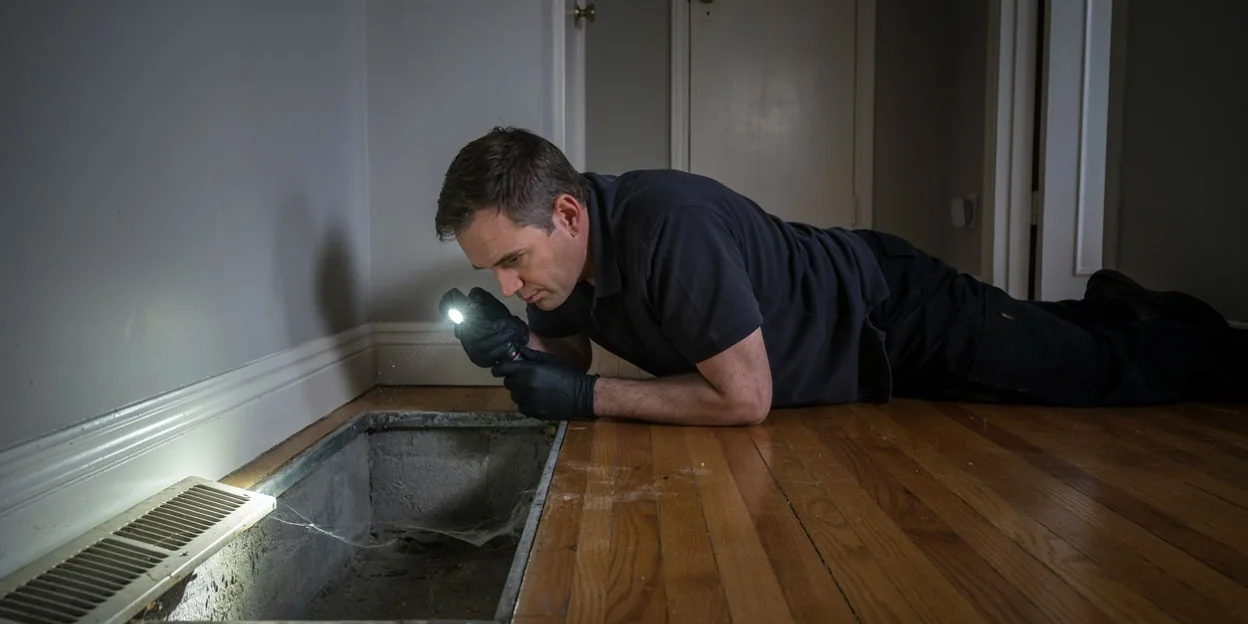
Every June when you fire up the swamp cooler on the roof of your West Valley rambler, the house smells like a wet basement for ten minutes. This year the smell did not go away. The duct that drops from the cooler through the hall ceiling has a brown ring around the register, and the furnace in the basement, which shares those ducts, has a filter that comes out damp. This site connects you by phone with an independent local provider who does HVAC mold cleaning in Salt Lake City and across Salt Lake County.
Two machines, one set of ducts
Most older Salt Lake homes run two systems through the same ductwork: a gas furnace in the basement and an evaporative cooler on the roof. The crew starts at the top, pulling the cooler pads and looking at the pan, the float valve, and the curb where the duct passes through the roof. A pan that has been overflowing drips down the chase into the duct and the ceiling framing around it. Then they go to the basement and open the furnace: the filter cabinet, the blower compartment, the plenum, and the first few feet of trunk line.
A camera goes into the ducts to see how far the growth travels, and a moisture meter reads the ceiling drywall around the drop and the framing around the furnace. The crew tells you which machine is the source before any cleaning starts, because the fix is different for each.
Shut the cooler water off and switch the fan to auto
Turn off the water supply to the cooler at the valve, usually a small saddle valve on a copper or plastic line near the water heater or an outside hose bib. Turn the cooler off at the switch. Set the thermostat fan to auto so the furnace blower only runs when it is heating or cooling, rather than pulling air through wet ducts all day.
Do not run duct-cleaning chemicals or spray anything into a register. Pull the furnace filter and photograph it, then photograph the register with the ring and the cooler pan if you can reach the roof safely. Leave the pads in place until the crew has seen them.
Cooler, duct, plenum, and the ceiling around the drop
The cooler pads and any growth-covered media come off and go in bags. The pan, the housing, and the curb are cleaned and the float and pan fixed or replaced, which is cooler-service work the provider either does or tells you to have done first. The duct drop below the cooler is cleaned by hand and with HEPA equipment to the point where the camera shows clean metal; flexible duct with growth inside is replaced, not cleaned.
In the basement the filter cabinet, blower, and plenum are cleaned and any wet insulation lining the plenum is removed. Ceiling drywall around the duct drop that reads wet comes out under mold removal, and growth on the roof sheathing around the cooler curb is attic mold remediation. A smell that lingers after the system is clean is mold odor removal.
Swamp coolers, flat-chase ducts, and a basement furnace
Evaporative coolers were on four out of five homes in this region in the late 1960s and early 1970s, and the ranches of Millcreek, Holladay, Taylorsville, West Valley City, and Magna still carry thousands of them. They work because the valley air is dry, and they leak because a float valve sticks or a pan rusts through, dripping down a duct chase that nobody opens for decades. The furnace at the bottom of that chase sits in the basement, where spring groundwater adds its own damp.
Utah has no mold license; the provider represents its own training, and cooler, furnace, and duct replacement is licensed HVAC work under a Utah contractor license. Cooler drips and condensation are rarely covered losses, so ask the provider for photos and a written scope anyway.
When you call about a musty furnace or cooler in Salt Lake
Have the address, whether the house has a rooftop or window cooler, where the furnace sits, and when the smell started. Say whether the smell comes with cooling, heating, or both, and whether a register or ceiling has a stain. Call (801) 457-5486.