Mold Odor Removal in Salt Lake City, UT
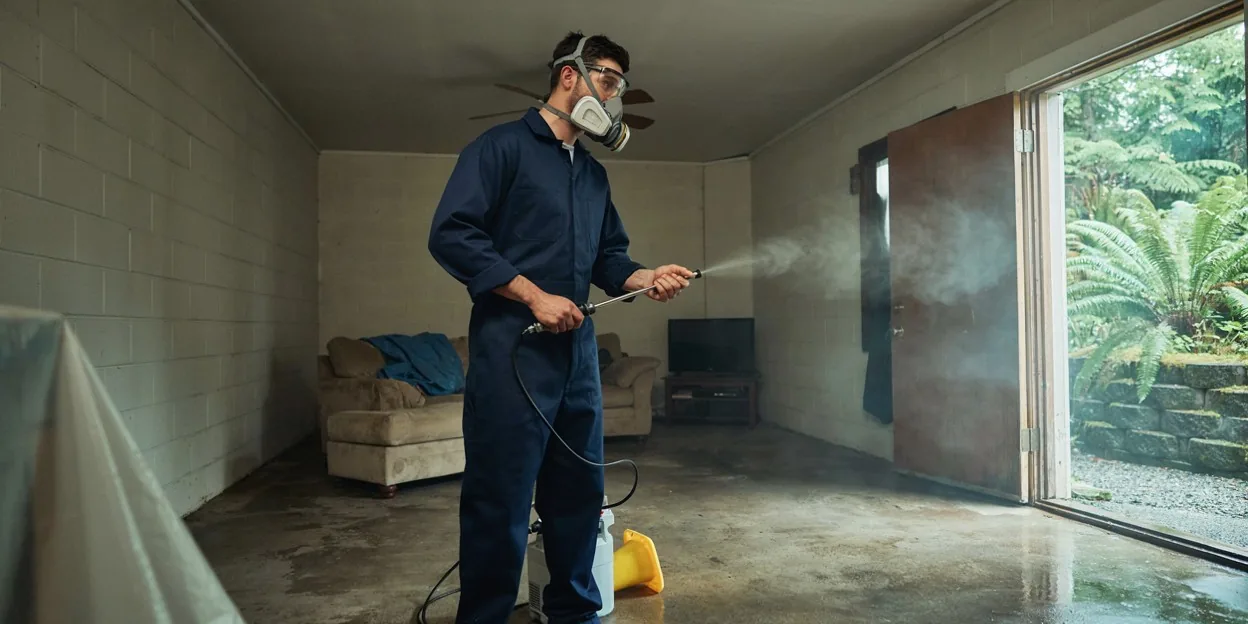
Every April the finished basement of your Murray house starts to smell like the inside of a root cellar, and every July it fades. The walls look fine. The carpet looks fine. You have run a dehumidifier, pulled the drain cover, and sprayed the room, and the smell comes back with the melt. This site connects you by phone with an independent local provider who does mold odor removal in Salt Lake City and across Salt Lake County.
Following a smell to the wall that is wet behind the paint
A musty smell with nothing showing is a hidden-moisture problem, and the crew hunts it with a meter and a thermal camera rather than a nose. In a Salt Lake basement the usual suspects are the carpet pad against an exterior wall, the back of paneling or drywall furred over the block, the bottom plate behind the baseboard, and the slab under a built-in or a closet where no one lifts the carpet. They read every exterior wall low, then the interior walls that share a plate, and the cold line on the camera usually points at the answer.
Once they find the wet material, the job turns into ordinary removal: containment at the stairwell, a HEPA scrubber at the window well, and the damp material out. Odor treatment on its own, without finding the source, is a spray that fades by the next spring.
Lift a corner of carpet and stop spraying
Pull back the carpet in the corner that smells strongest and look at the pad and the tack strip; a dark, cold pad is your answer. Photograph it and lay the carpet back down. Stop using sprays, gels, and plug-in fragrance; they hide the signal the crew is tracking and do nothing to the growth.
Run the dehumidifier and keep the basement door closed. Walk outside and check which window well, downspout, or stretch of grade sits over the smelly corner. If the smell is strongest when the furnace blower runs, say so when you call, because that points at the ductwork rather than the wall.
Pad, paneling, and plate out, then the smell treated last
The wet carpet pad comes out, along with any drywall, paneling, or insulation the meter flagged, cut to the dry line and bagged inside the containment. The framing and the foundation wall behind it are HEPA vacuumed and wiped, and a bottom plate that has rotted is cut out and replaced. Air movers and a dehumidifier run until the slab and the framing read dry.
Only then is the odor itself treated, because treating a room with the wet material still in it is a waste of a day. Visible growth found behind the paneling is handled under mold removal. A smell that comes from the registers points to HVAC mold cleaning. A basement with several wet rooms is whole-home mold remediation. New pad, carpet, and drywall afterward is mold damage repair.
Spring groundwater, carpet on a slab, and basements finished over block
The seasonal smell is the tell. Salt Lake basements sit in soil that saturates when the Wasatch snowpack melts between March and June and dries out by midsummer, so a wall that only weeps in spring keeps the pad behind it damp for two or three months a year and dry the rest. Basements finished in the 1960s and 1970s in Murray, Millcreek, Holladay, and Taylorsville put carpet pad straight on the slab and paneling straight over the block, which is exactly the material a seasonal seep feeds.
A dark line low on a plaster wall in the older houses of the Avenues or Sugar House is the same story on a stone foundation. Utah licenses no mold trade, so the provider represents its own training; the rebuild is Utah contractor work. Groundwater is excluded on most Utah policies, so the record you build is for your own files and the next buyer.
When you call about a basement that smells every spring
Have the address, which room smells strongest, whether the smell comes and goes with the season or with the furnace, and whether the basement has carpet on the slab or paneling on the walls. Say whether you have found anything under the carpet yet. Call (801) 457-5486.