Bathroom Mold Removal in Salt Lake City, UT
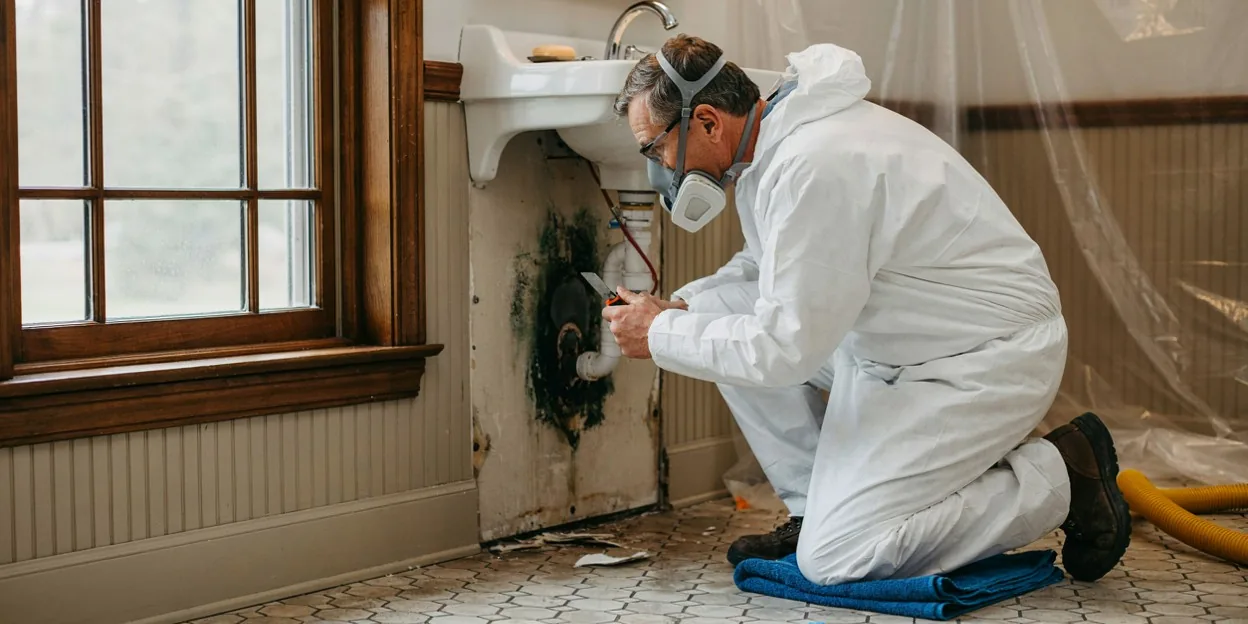
The only bathroom in your 1915 Liberty Wells bungalow has a window that paints shut every winter and no exhaust fan. The ceiling corner over the tub has a gray patch you have scrubbed off four times since October, and this spring the plaster behind the tile at the tub edge has gone soft and the grout is black. This site connects you by phone with an independent local provider who does bathroom mold removal in Salt Lake City and across Salt Lake County.
Steam from above, a leak from below, and a plaster wall between
A bathroom in an old Salt Lake house usually has two separate problems in one small room. The ceiling patch is condensation: a shower in a closed room in January puts steam on the coldest surface, which in an uninsulated 1920s ceiling is the corner against the exterior wall. The soft wall at the tub is water, either through failed grout and a cracked tile or from a drain or supply fitting inside the wall.
The crew meters the ceiling, the tile wall, the wall behind the toilet, and the floor at the tub apron, and in a basement bathroom the slab too. Then the room is sealed: plastic over the door, the window closed, and a small HEPA scrubber exhausting outside so the dust from plaster and lath does not reach the hall.
Close the angle stops and leave the plaster alone
Shut the valves under the sink and put a bowl under the trap. If the tub wall is the suspect, stop using that shower until the crew has looked. Photograph the ceiling patch, the grout line, the soft spot, and the floor at the tub.
Do not scrape the ceiling or pick at the soft plaster; both shed when disturbed. Crack the window after showers if it will open, and do not re-caulk or paint over anything before the visit, because both hide the line the crew needs to see.
Plaster and lath out to the dry line, tile saved where it can be
Wet plaster and lath on the ceiling and the tub wall come out to the moisture line, which in an old wall often means down to the studs around the tub. Tile that is sound and set on a solid base can sometimes stay; tile set on wet plaster or rotted wood backing comes out with the wall. Framing is HEPA vacuumed, cleaned, and dried before anything is rebuilt, and a sill or stud that has rotted at the tub is cut and sistered.
The fix goes in before the wall closes: a new drain or supply fitting, a proper backer board behind new tile, and a vented exhaust fan where there was none. If the growth continues into the hall or a bedroom closet behind the tub, that is mold removal. Putting the ceiling, wall, tile, and vanity back is mold damage repair. A musty smell that stays after the wall is open is mold odor removal.
Unvented bathrooms, cast-iron drains, and a basement bath added in 1972
The 1890s to 1920s houses in the Avenues, Liberty Wells, Capitol Hill, and Sugar House were built with one bathroom, often added later, with a window for ventilation and plaster walls on wood lath. Winter here keeps that window shut for five months, and the steam has nowhere to go. The 1950s to 1970s ranches of Millcreek, Murray, and Holladay added a second bathroom in the basement, usually with a fan that dumps into the joist space and a cast-iron drain that has been seeping at the slab for years.
The Salt Lake County Health Department treats a recurring patch as a moisture problem first; a fan or a repaired drain matters more than the fourth scrubbing. Utah licenses no mold trade, so the provider represents its own training; the plumbing and the rebuild are licensed contractor work under a Utah contractor license, and a drain or supply repair in a wall may need a city permit.
When you call about a bathroom in Salt Lake that stays moldy
Have the address, whether the bathroom has a fan or a window, where the growth is, and whether the wall or floor is soft. Say whether a plumber has looked at the drain and whether the house is a pre-war home or a later rambler. Call (801) 457-5486.